
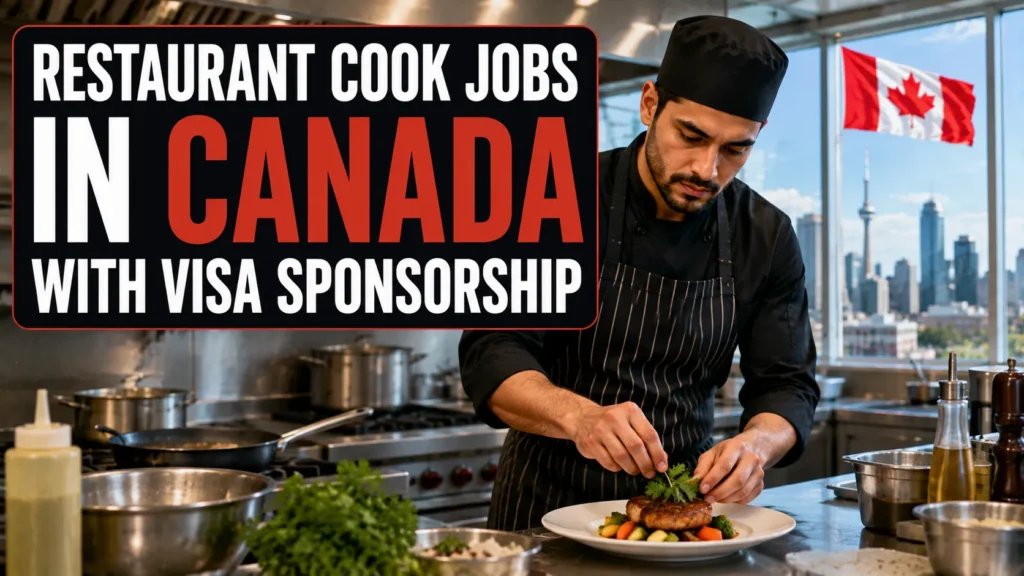
Canada’s restaurant and food service industry offers employment opportunities for cooks with different levels of experience. Restaurants, hotels, cafés, catering businesses, and other food establishments regularly need workers who can prepare meals, maintain kitchen standards, and support daily operations.
Restaurant cook jobs can be suitable for foreign workers with professional kitchen experience. In Canada, cooks are classified under NOC 63200, and job duties can include preparing complete meals, cooking individual dishes, checking kitchen areas, ordering supplies, and maintaining food quality.
However, foreign applicants should understand that visa sponsorship is not automatic. Canadian employers may need to complete the required immigration process before hiring a worker from overseas. Depending on the situation, this can involve a Labour Market Impact Assessment (LMIA) or another work-permit route.
Job Overview
- Job Title: Restaurant Cook
- Country: Canada
- Job Type: Full-time, part-time, permanent, or temporary
- Experience Required: Usually 1–3 years, depending on the employer
- Education Required: Secondary school or relevant cooking experience may be required
- NOC: 63200
- Visa Sponsorship: Available only with eligible employers and immigration pathways
- Work Locations: Ontario, Alberta, British Columbia, Quebec, Manitoba, Saskatchewan, and other provinces
- Main Duties: Preparing meals, cooking dishes, maintaining kitchen hygiene, ordering supplies, and supporting kitchen operations
- Work Environment: Restaurants, hotels, cafés, catering companies, and commercial kitchens
Why Restaurant Cooks Are Needed in Canada
Restaurants depend on skilled and reliable cooks to prepare meals and maintain consistent food quality. Busy restaurants may require several cooks working different shifts to handle breakfast, lunch, dinner, takeaway orders, and special events.
Job Bank listings in 2026 show restaurant cook positions across different Canadian provinces, including jobs advertised with LMIA requested. Some current postings also offer full-time employment and wages that vary considerably by location and experience.
Demand can be found in large cities as well as smaller and rural communities. Some employers may also provide relocation assistance or other support to attract suitable workers.
Types of Restaurant Cook Jobs
Line Cook
Line cooks prepare food according to the restaurant’s recipes and standards. They may work at stations such as grill, fryer, sauté, or preparation.
First Cook
A first cook usually has more experience and may handle more complex food preparation. Some positions also involve supervising kitchen helpers.
Prep Cook
Prep cooks prepare ingredients before service. Their duties can include cutting vegetables, preparing sauces, portioning meat, and organising ingredients.
Ethnic Cuisine Cook
Restaurants serving Indian, Pakistani, Chinese, Middle Eastern, Italian, Mexican, and other cuisines may hire cooks with specialised experience.
Hotel Restaurant Cook
Hotel kitchens can offer opportunities for cooks who can prepare meals for restaurant customers, events, conferences, and large groups.
Job Responsibilities
Restaurant cooks in Canada may be responsible for:
- Preparing and cooking complete meals
- Preparing individual dishes according to recipes
- Preparing ingredients for kitchen service
- Checking food quality and freshness
- Following food safety procedures
- Preparing meals for customers with allergies
- Maintaining clean kitchen and work areas
- Operating kitchen equipment safely
- Ordering food and kitchen supplies
- Controlling food portions
- Checking inventory
- Helping train kitchen staff
- Supporting chefs and other kitchen workers
- Managing food preparation during busy periods
Also Check: Construction Worker Jobs in Canada with Visa Sponsorship 2026
Salary and Employee Benefits
Restaurant cook salaries vary based on location, experience, employer, position, and working hours. Current Canadian job postings show significant differences between entry-level cook positions and more experienced roles.
Possible benefits may include:
- Regular full-time wages
- Overtime opportunities
- Paid vacation
- Staff meals
- Uniforms or work clothing
- Employee discounts
- Training opportunities
- Relocation assistance for some positions
- Staff accommodation in selected locations
Applicants should carefully review the employment contract before accepting a position.
Visa Sponsorship and Work Permit Process
Foreign workers generally need legal authorization before working in Canada. For employer-specific work permits, the employer may need an LMIA unless the position qualifies for an exemption.
The process can generally involve:
1. Find an Eligible Employer
Look for restaurants that are willing to consider foreign workers and have a suitable immigration pathway available.
2. Receive a Job Offer
The employer must provide a genuine job offer that clearly explains the position, salary, working hours, and employment conditions.
3. Employer Completes the Required Process
Where an LMIA is required, the employer applies through the Temporary Foreign Worker Program. The LMIA process assesses whether hiring a foreign worker is justified and whether qualified Canadian workers are available.
4. Apply for a Work Permit
After receiving the necessary LMIA or other required documentation, the foreign worker can apply for the appropriate Canadian work permit.
5. Wait for the Decision
The applicant must wait for the immigration authorities to process the application before travelling to Canada for employment.
Important: As of September 2026, Canada’s Temporary Foreign Worker Program has an ongoing moratorium affecting certain food service jobs. Applicants should therefore check the latest rules and confirm that their specific cook position and employer are eligible before relying on an advertised sponsorship opportunity.
Requirements for Restaurant Cook Jobs
Employers may look for candidates with:
- Previous restaurant cooking experience
- Knowledge of food preparation
- Understanding of food safety
- Ability to follow recipes
- Good knife and kitchen skills
- Physical stamina
- Ability to work under pressure
- Teamwork and communication skills
- Flexibility with shifts
- Ability to work evenings, weekends, and holidays
Some positions require formal culinary training, while others accept relevant work experience instead. Current Canadian postings show that requirements can differ significantly between employers.
Skills That Improve Your Chances
Foreign cooks can improve their chances by developing skills in specific cuisines, food preparation, inventory management, portion control, and kitchen organisation.
Experience with commercial kitchen equipment is also valuable. English or French communication skills can make it easier to work with chefs, servers, managers, and other kitchen staff.
A strong CV should clearly list previous restaurants, job titles, years of experience, cuisines handled, and major responsibilities.
Working Conditions
Restaurant cooks normally work in busy kitchens where they spend most of the shift standing. The environment can be hot, noisy, and fast-paced.
Cooks may need to lift food supplies, work near ovens and cooking equipment, and handle sharp kitchen tools. Evening, weekend, and holiday shifts are common because restaurants often operate during these periods.
Good time management and teamwork are essential during busy service hours.
Advantages of Restaurant Cook Jobs in Canada
Restaurant cook positions can offer several advantages:
- Opportunities for experienced kitchen workers
- Jobs in different provinces and cities
- Possibility of full-time employment
- Experience in Canadian commercial kitchens
- Opportunities to specialise in different cuisines
- Potential career growth in the food service industry
- Possibility of moving into senior cook or chef positions
- Opportunities to improve English or French
How to Apply
Foreign applicants can follow these steps when searching for restaurant cook jobs in Canada:
- Search for vacancies: Look for restaurant cook, line cook, first cook, prep cook, and kitchen cook positions on legitimate Canadian job platforms and company career pages.
- Check LMIA information: Look specifically for vacancies stating that an LMIA has been requested or that the employer is open to hiring foreign workers.
- Prepare your CV: Include your cooking experience, cuisines you know, previous employers, qualifications, skills, and contact information.
- Highlight relevant experience: Mention experience with commercial kitchens, food safety, menu preparation, inventory, and busy restaurant service.
- Apply directly: Submit your CV through the employer’s official application system or the job platform specified in the vacancy.
- Confirm sponsorship: Ask the employer whether they can legally hire a foreign worker and whether an LMIA or another work-permit route applies.
- Review the job offer: Check the salary, hours, duties, location, accommodation, and other conditions before accepting.
- Complete the work-permit process: If eligible, follow the required Canadian immigration process using the documents provided by the employer.
- Avoid scams: Never pay an agent for a guaranteed Canadian job or visa. Verify the employer, job offer, and immigration requirements before making payments. Click Apply Now to get started
Final Thoughts
Restaurant cook jobs can provide opportunities for experienced food service workers who want to build a career in Canada. Employers may look for cooks with practical experience, good kitchen skills, reliability, and the ability to work in a fast-paced environment.
However, foreign applicants need to pay close attention to Canada’s changing temporary foreign worker rules. Not every restaurant cook vacancy offers sponsorship, and an advertised position does not automatically mean that a foreign worker can obtain a work permit.
The safest approach is to target genuine employers, carefully check the immigration eligibility of each position, and never pay anyone who promises a guaranteed job or visa.
1 thought on “Restaurant Cook Jobs in Canada with Visa Sponsorship 2026”