
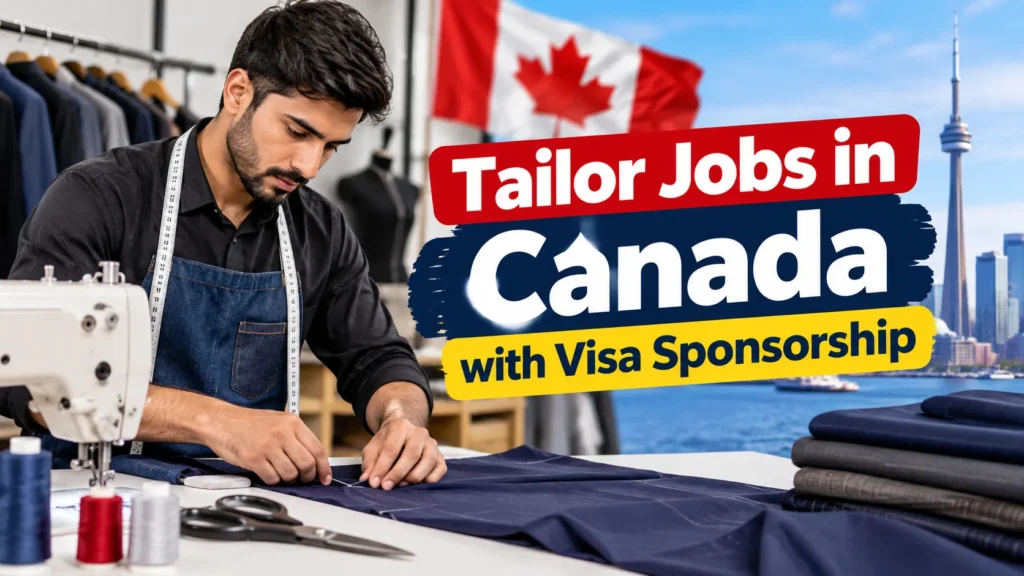
Tailor jobs in Canada can offer opportunities for skilled workers with experience in clothing alterations, garment construction, sewing, and fashion services. Tailors are employed by clothing stores, alteration shops, fashion businesses, dry cleaners, uniform suppliers, costume companies, and textile businesses.
For foreign workers, some Canadian employers may recruit internationally when they cannot find suitable workers locally. Depending on the position and employer, work permit support may be available. However, visa sponsorship is not guaranteed for every vacancy, so applicants should carefully check the job offer and current Canadian immigration requirements before applying.
Job Overview
- Job Title: Tailor
- Country: Canada
- Job Type: Full-time
- Experience: 1–3 years preferred
- Education: High school or relevant sewing training
- Language: English or French
- Visa Sponsorship: May be available for eligible positions
- Salary: Approximately CAD $30,000–$55,000 per year
Why Canada Needs Tailors
Canada has a diverse clothing and textile market that creates demand for workers who can repair, alter, and customize garments. Tailors are needed by clothing retailers, independent alteration businesses, uniform suppliers, bridal shops, and fashion companies.
Customers often need clothing adjusted for size, length, fit, or style. Tailors may also repair damaged garments, replace zippers, adjust waistlines, shorten sleeves, and make other changes according to customer requirements.
Demand can vary between provinces and cities. Larger urban areas may provide more opportunities because they have more clothing retailers, fashion businesses, and alteration services.
Types of Tailor Jobs Available
Clothing Alteration Tailor
Alteration tailors modify existing garments to improve their fit. Common tasks include shortening trousers, adjusting sleeves, changing waist sizes, and making other alterations.
Sewing Machine Operator
Sewing machine operators use industrial or commercial machines to stitch fabric and complete garment components. Experience with different machines can be valuable.
Fashion Tailor
Fashion tailors work with designers, clothing businesses, or private customers to create or modify garments according to specific designs and measurements.
Bridal and Formalwear Tailor
These specialists alter wedding dresses, suits, evening gowns, and other formal clothing. Precision is particularly important because these garments often require detailed adjustments.
Uniform Tailor
Uniform suppliers and businesses may employ tailors to produce or alter uniforms for schools, companies, healthcare facilities, hospitality businesses, and other organizations.
Also Check: Office Clerk Jobs in Canada with Visa Sponsorship 2026
Tailor Responsibilities
Typical responsibilities may include:
- Taking customer measurements accurately
- Altering garments according to measurements
- Cutting fabric and garment materials
- Operating sewing machines
- Hand stitching when required
- Repairing damaged clothing
- Replacing zippers, buttons, and fasteners
- Adjusting hems, sleeves, waistlines, and collars
- Following garment patterns and instructions
- Inspecting finished work for quality
- Maintaining sewing machines and tools
- Keeping the work area clean and organized
Tailors need to pay close attention to measurements and details because small errors can affect the final fit of a garment.
Salary and Employee Benefits
Tailor salaries in Canada vary depending on experience, location, employer, specialization, and working arrangements. Workers with advanced sewing skills or experience in specialized garments may earn more than entry-level employees.
Some employers may provide benefits such as paid vacation, health coverage, employee discounts, retirement plans, overtime pay, or professional training. Benefits differ between employers and employment contracts.
Applicants should confirm the hourly wage or annual salary, working schedule, overtime arrangements, benefits, and any other employment conditions before accepting a position.
Visa Sponsorship for Foreign Workers
Foreign tailors may find Canadian employers willing to consider international applicants for suitable positions. Depending on the circumstances, an employer may need to obtain a Labour Market Impact Assessment (LMIA) before a foreign worker can apply for an employer-specific work permit.
Other work permit or immigration pathways may apply depending on the worker’s qualifications, occupation, province, and personal circumstances.
Applicants should not assume that a job advertisement mentioning visa sponsorship guarantees a work permit. They should verify the employer and understand what immigration support is actually being provided before paying recruitment fees or making travel arrangements.
Requirements for Tailor Jobs in Canada
Common requirements may include:
- Previous tailoring or sewing experience
- High school education or relevant training
- Strong sewing and garment alteration skills
- Ability to take accurate measurements
- Knowledge of fabrics and garment construction
- Ability to operate sewing machines
- Good hand-eye coordination
- Attention to detail
- Ability to follow patterns and instructions
- Basic English or French communication skills
Some employers may accept applicants with practical experience instead of formal qualifications. Specialized tailoring positions may require additional training or several years of experience.
Skills That Improve Your Chances
Strong sewing skills are essential for anyone applying for tailor jobs. Experience with industrial sewing machines, overlock machines, embroidery equipment, or other garment tools can help applicants qualify for more positions.
Knowledge of different fabrics is also useful because materials behave differently during cutting, sewing, pressing, and alteration. Tailors should understand how to handle delicate fabrics as well as heavier materials.
Customer service skills can be particularly valuable for retail alteration jobs. Workers often need to discuss measurements, explain possible alterations, and understand what the customer wants.
Working Conditions
Tailors may work in clothing stores, alteration shops, factories, fashion studios, dry cleaners, bridal shops, and uniform businesses.
The work generally involves sitting or standing for extended periods while cutting, sewing, pressing, or examining garments. Workers may also perform repetitive hand movements and need to maintain concentration for detailed tasks.
Some workplaces can be busy during wedding seasons, holidays, school uniform periods, or other high-demand times. Tailors should follow workplace safety procedures when using sewing machines, irons, cutting tools, and other equipment.
How to Apply for Tailor Jobs in Canada
- Search for current tailor and sewing vacancies through reputable Canadian job boards and company career pages.
- Check whether the employer accepts applications from foreign workers.
- Prepare a professional resume highlighting your tailoring and sewing experience.
- Mention skills such as alterations, pattern cutting, measurements, garment repair, and machine sewing.
- Include relevant fashion, textile, or sewing training.
- Prepare photographs or examples of your previous tailoring work if requested.
- Prepare copies of employment and education documents.
- Confirm the employer’s work permit or sponsorship arrangements before accepting an offer.
- Review the salary, schedule, benefits, and workplace conditions carefully.
- Avoid anyone promising a guaranteed Canadian job or visa in exchange for an unexplained upfront payment.
- Click Apply Now to get started.
Career Growth
Tailors can develop their careers by gaining experience in specialized garment work, fashion production, bridal alterations, uniforms, or custom clothing. Experienced workers may progress to senior tailor, alteration supervisor, garment technician, or workshop supervisor positions.
Some tailors may eventually establish their own alteration or custom clothing businesses. Additional training in fashion design, garment production, or business management can also create further career opportunities.
Final Thoughts
Tailor jobs in Canada can provide opportunities for workers with practical sewing, alteration, and garment construction skills. Employers may hire tailors for clothing stores, alteration businesses, fashion companies, uniform suppliers, bridal shops, and other workplaces.
For foreign workers, visa sponsorship depends on the specific employer, occupation, and applicable immigration pathway. Applicants should verify job advertisements carefully, confirm the work permit arrangements, and review current Canadian immigration requirements before making financial or travel commitments.