
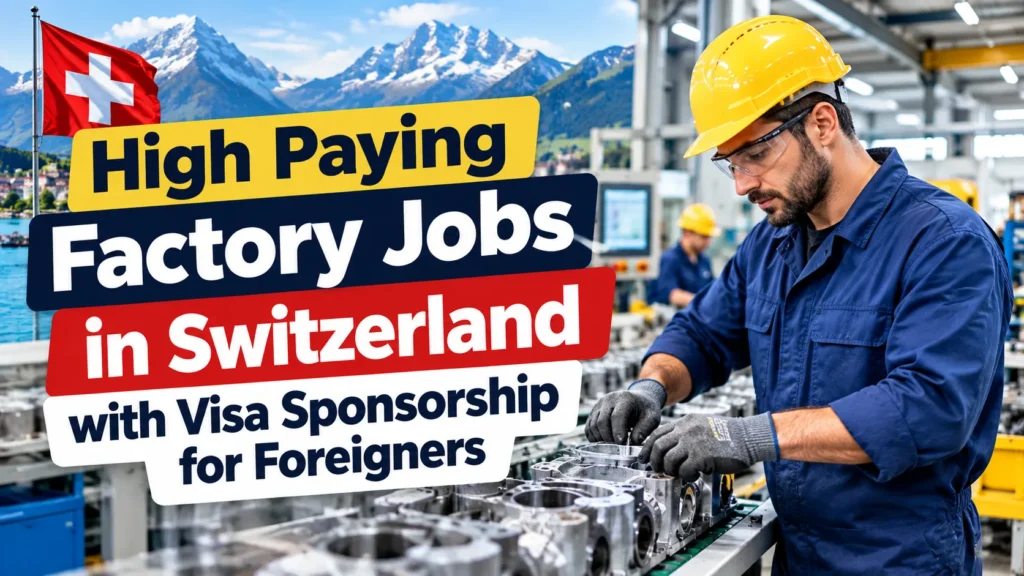
Switzerland is known for its strong manufacturing sector, advanced technology, pharmaceuticals, food production, machinery, and precision industries. These sectors create employment opportunities for workers with practical skills, technical training, and industrial experience.
For foreigners, Switzerland can offer attractive salaries, but getting a work permit is more difficult than in many other European countries. Non-EU/EFTA workers generally need to be highly qualified, and Swiss employers must show that they could not find a suitable worker in Switzerland or the EU/EFTA region.
Job Overview
- Job Title: Factory Worker / Production Worker
- Location: Switzerland
- Job Type: Full-time
- Experience: Depends on the position
- Education: Technical training may be required for skilled roles
- Salary: Varies by occupation, experience, and location
- Visa Sponsorship: Limited and subject to Swiss work permit rules
- Work Setting: Factories, manufacturing plants, warehouses, and production facilities
- Common Industries: Machinery, pharmaceuticals, food, electronics, chemicals, and manufacturing
Why Factory Workers Are Needed in Switzerland
Switzerland has a well-developed manufacturing industry that produces everything from precision machinery and medical technology to food products and pharmaceutical goods. Factories rely on trained employees to operate equipment, monitor production, maintain quality, and prepare products for distribution.
Workers with technical skills can be particularly valuable in specialized manufacturing environments. Experience with machinery, automation, quality control, maintenance, electronics, or production systems may improve employment prospects.
However, foreign applicants should understand that demand for workers does not automatically mean that an employer can sponsor a non-EU/EFTA applicant. Swiss immigration rules give priority to workers already available in Switzerland and the EU/EFTA labor market.
Types of Factory Jobs Available
Production Worker
Production workers assist with manufacturing processes. Their duties can include operating equipment, assembling products, checking materials, and keeping production areas organized.
Machine Operator
Machine operators run industrial equipment and monitor machines during production. Technical knowledge and previous factory experience may be required.
Quality Control Worker
Quality control workers inspect products and materials to make sure they meet company standards. They may record defects and report production problems.
Maintenance Technician
Maintenance technicians repair and maintain factory machinery. These positions normally require technical qualifications and relevant work experience.
Packaging Worker
Packaging workers prepare finished products for shipment. They may operate packaging equipment, label products, inspect packages, and organize completed orders.
Skilled Manufacturing Technician
Skilled technicians can work with advanced machinery, automation systems, electronics, or specialized production equipment. These roles may offer higher salaries than basic production positions.
Also Check: Agriculture Jobs in Switzerland with Visa Sponsorship 2026
Job Responsibilities
Factory workers may be responsible for:
- Operating production machinery
- Assembling products
- Checking raw materials
- Monitoring production lines
- Inspecting finished products
- Following workplace safety procedures
- Packing and labeling products
- Recording production information
- Cleaning work areas
- Reporting equipment problems
- Following technical instructions
- Meeting production targets
- Maintaining quality standards
- Working with supervisors and other employees
Duties vary considerably depending on the factory and position.
Salary and Employee Benefits
Factory salaries in Switzerland can be attractive compared with many countries. Current Jobs.ch salary data puts the average gross annual salary for a production worker at around CHF 58,800, including bonuses and a 13th salary. Actual earnings vary according to experience, employer, location, and occupation.
Skilled production specialists can earn considerably more. For example, Jobs.ch reports an average of about CHF 85,800 per year for a production specialist category, although this is a more skilled occupation and should not be treated as the standard salary for all factory workers.
Possible employment benefits include:
- Competitive salary
- Paid vacation
- Overtime pay where applicable
- Pension contributions
- Accident insurance
- Health-related benefits
- Employee training
- Shift allowances
- Performance bonuses
- Career advancement opportunities
Always check the exact salary and benefits in the employment contract.
Visa Sponsorship for Foreign Workers
Visa sponsorship for factory jobs in Switzerland depends heavily on the applicant’s nationality and qualifications.
Workers from EU/EFTA countries generally have easier access to the Swiss labor market under the applicable free movement arrangements. For workers from outside the EU/EFTA area, the rules are much stricter. Switzerland generally admits highly qualified third-country workers, and the number of permits is limited by annual quotas.
The employer normally has to apply for the work permit and demonstrate that a suitable Swiss or EU/EFTA worker could not fill the position. Salary and employment conditions must also meet the standards applicable to the region and sector.
For this reason, basic factory jobs are generally much harder to obtain through sponsorship than specialized manufacturing, engineering, technical, or supervisory positions.
Requirements for Factory Jobs
Employers may look for candidates with:
- Previous factory experience
- Technical qualifications for skilled positions
- Machinery operating experience
- Knowledge of workplace safety
- Good physical fitness
- Attention to detail
- Reliability and punctuality
- Ability to work shifts
- Basic computer skills
- Knowledge of quality control
- Ability to follow technical instructions
- Relevant language skills
German, French, or Italian language ability can also be useful depending on the location of the factory.
Skills That Improve Your Chances
Technical skills can make a major difference when applying for Swiss manufacturing positions. Experience with CNC machines, industrial equipment, electrical systems, automation, maintenance, quality control, or production software may help candidates compete for skilled positions.
Applicants should also highlight measurable experience on their CV, such as machinery operated, production responsibilities, safety training, certifications, and years of industrial experience.
Working Conditions
Factory employees may work in production halls, cleanrooms, warehouses, workshops, or specialized manufacturing facilities. Some factories operate around the clock, so workers may be expected to work morning, evening, or night shifts.
The work can involve standing for long periods, operating machinery, lifting materials, wearing protective equipment, and following strict safety procedures.
How to Apply
- Search Swiss company career pages and reputable job websites.
- Look for production, manufacturing, machine operator, technician, and maintenance vacancies.
- Check whether the employer considers international applicants.
- Prepare a professional CV showing your factory experience and technical skills.
- Include relevant certificates and training.
- Highlight machinery, quality control, maintenance, or automation experience.
- Ask the employer whether the position is eligible for a Swiss work permit.
- Confirm salary, working hours, accommodation, and benefits.
- Never pay someone for a guaranteed Swiss work permit.
- Verify the employer and employment contract before making travel arrangements.
- Click Apply Now to get started
Final Thoughts
High-paying factory jobs do exist in Switzerland, particularly in skilled manufacturing, machinery, pharmaceuticals, medical technology, and technical production. However, foreign workers should not assume that every factory vacancy offers visa sponsorship.
For non-EU/EFTA applicants, Switzerland has strict admission rules, annual quotas, and a preference for workers already available in Switzerland or the EU/EFTA labor market.
Candidates with strong technical qualifications, specialized factory experience, and relevant language skills may have better prospects. Before applying, always check the current Swiss work permit requirements and confirm that the employer can legally hire workers from your country.