
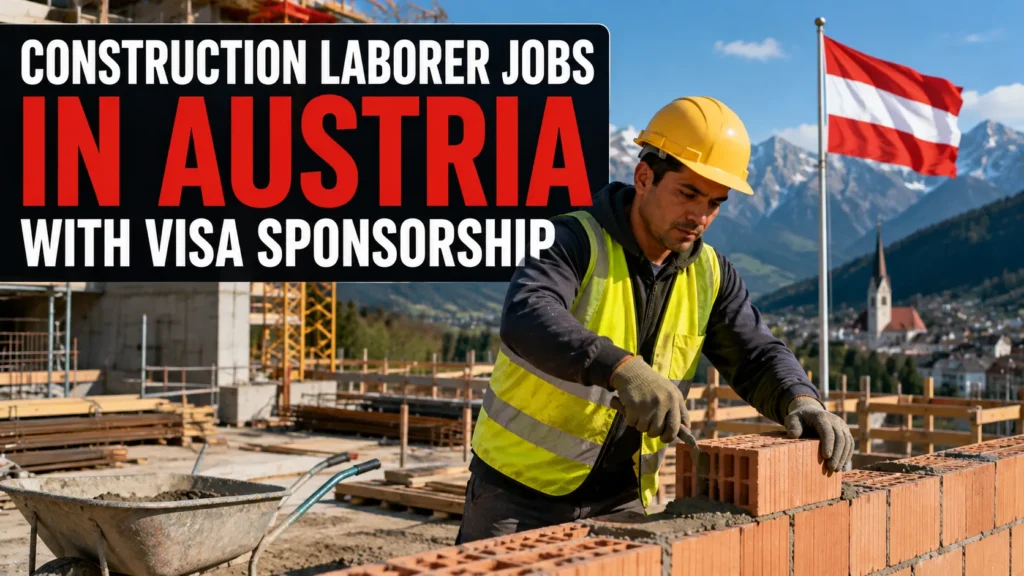
Austria has an active construction industry with ongoing work in residential buildings, commercial properties, roads, renovations, and infrastructure. This creates opportunities for skilled and experienced construction workers. For foreign workers, some Austrian employers may offer support with work permits when hiring workers who meet their requirements. However, visa sponsorship is not guaranteed for every construction laborer position.
In 2026, several construction-related occupations are included in Austria’s shortage occupation lists. For example, bricklayers are listed as a regional shortage occupation in provinces including Carinthia, Lower Austria, Salzburg, Tyrol, and Vorarlberg.
Job Overview
Job Title: Construction Laborer
Country: Austria
Job Type: Full-time, permanent or temporary
Experience Required: 1–3 years preferred
Education Required: Construction training or relevant experience
Visa Sponsorship: Available for eligible foreign workers through suitable employers and immigration routes
Work Locations: Construction sites across Austria
Salary: Depends on experience, occupation, employer, and collective agreement
Construction laborers may work on new buildings, road projects, renovation sites, industrial facilities, and other construction projects. Workers with experience in bricklaying, concrete work, carpentry, masonry, or equipment operation may have better opportunities.
Why Construction Laborers Are Needed in Austria
Construction projects require a large workforce with different practical skills. General laborers support skilled tradespeople by preparing materials, moving equipment, cleaning work areas, and assisting with daily site activities.
Foreign workers can also find opportunities when they have useful construction skills and meet Austrian employment and immigration rules. The country’s 2026 shortage occupation list includes several construction-related professions, including bricklayers, carpenters, construction joiners, and certain construction technicians.
This means workers with a specific trade qualification may have more immigration options than someone applying only as a general laborer.
Types of Construction Jobs Available
General Construction Laborer
General laborers assist with basic construction tasks. They may carry materials, prepare work areas, remove waste, and support skilled workers.
Bricklayer
Bricklayers build walls and other structures using bricks, blocks, and related materials. Bricklaying is included among Austria’s regional shortage occupations for 2026 in several provinces.
Concrete Worker
Concrete workers help prepare, pour, spread, and finish concrete for foundations, floors, walls, and other structures.
Construction Carpenter
Construction carpenters work with wood and building materials. Carpenters are included on Austria’s nationwide shortage occupation list for 2026.
Construction Site Helper
Site helpers support different teams with material handling, basic preparation, cleaning, and other physical tasks.
Job Responsibilities
Construction laborers may be responsible for:
- Loading and unloading construction materials.
- Preparing tools and equipment for workers.
- Digging, lifting, carrying, and moving materials.
- Assisting bricklayers, carpenters, and concrete workers.
- Keeping construction areas clean and organized.
- Following workplace safety rules.
- Helping with demolition and renovation work.
- Reporting damaged tools or unsafe conditions.
- Following instructions from supervisors and site managers.
The exact duties depend on the construction project and the worker’s trade.
Salary and Employee Benefits
Pay varies depending on the job, experience, location, qualifications, and applicable collective agreement. Skilled construction workers may earn more than entry-level laborers.
Possible benefits may include:
- Full-time employment.
- Paid vacation.
- Social insurance coverage.
- Overtime pay where applicable.
- Pension contributions.
- Workplace accident insurance.
- Employer-provided safety equipment.
- Possible accommodation assistance.
- Support with immigration paperwork when offered by the employer.
Also Check: HealthCare Jobs in Austria With Work Visa Sponsorship 2026
Visa Sponsorship Process
Foreign workers from outside the EU may need an Austrian residence and work permit before starting employment.
Find an Austrian Employer
Start by finding a genuine construction company offering a position suitable for your experience and qualifications.
Receive a Job Offer
For the Red-White-Red Card route for skilled workers in shortage occupations, applicants generally need a binding job offer and proof of completed training in an occupation listed as a shortage profession. A points system also applies.
Check the Occupation
Not every construction laborer position automatically qualifies for a shortage-occupation immigration route. A worker may have better options if their actual occupation matches a listed trade such as bricklayer or carpenter.
Submit the Application
The Red-White-Red Card application can generally be submitted by the worker through the Austrian representation abroad or by the prospective employer with the appropriate Austrian authority.
Wait for Approval
Do not travel for employment based only on a verbal promise. Wait until the required immigration and employment permissions are properly arranged.
Requirements for Construction Laborers
Applicants should usually have:
- Relevant construction experience.
- Good physical fitness.
- Ability to work outdoors and in different weather.
- Basic knowledge of construction tools.
- Ability to follow safety instructions.
- Valid passport and required documents.
- Training certificates where applicable.
- A genuine job offer for the relevant immigration route.
For many professions, formal recognition of foreign qualifications is not required. However, regulated professions can have different rules, so applicants should check their specific occupation.
Skills That Improve Your Chances
Experience with concrete, masonry, carpentry, scaffolding, tools, or construction machinery can strengthen an application. Basic German can also make communication easier on construction sites and improve your ability to follow instructions.
Safety awareness is especially important. Employers want workers who can work carefully around machinery, heavy materials, heights, and other site hazards.
Working Conditions
Construction laborers normally work full-time and spend much of the day on construction sites. The work can be physically demanding and may involve lifting heavy materials, standing for long periods, climbing, bending, and working outdoors.
Working hours depend on the employer and project. Weather can also affect outdoor construction work.
Advantages of Working as a Construction Laborer in Austria
Working in Austria can offer several advantages:
- Opportunity to work in a European country.
- Access to established labor protections.
- Experience with international construction projects.
- Opportunities to develop trade skills.
- Possible long-term employment for qualified workers.
- Potential immigration pathways for eligible skilled workers.
- Opportunities to move into higher-skilled construction roles.
How to Apply
- Search for construction vacancies through reputable Austrian job portals and company career pages.
- Check whether the employer accepts applications from non-EU workers.
- Prepare an updated resume showing your construction experience.
- Add copies of relevant trade certificates and training documents.
- Apply directly for suitable positions.
- Ask the employer whether they provide immigration or work-permit support.
- Check that the job title matches your actual skills and qualifications.
- Review the employment contract carefully before accepting an offer.
- Click Apply Now to get started
Be careful with agents who promise a guaranteed Austrian visa in exchange for a large upfront payment. A genuine employer should provide clear information about the position, salary, contract, and immigration process.
Final Thoughts
Construction Laborer Jobs in Austria with Visa Sponsorship 2026 can be worth exploring for workers with practical construction experience. However, applicants should understand that sponsorship depends on the employer, occupation, qualifications, and immigration route. Workers with recognized trade skills such as bricklaying or carpentry may have stronger opportunities because several construction occupations appear on Austria’s 2026 shortage occupation lists.
The best approach is to find a genuine employer, prepare strong documents, and check the official Austrian immigration requirements before making travel plans.