
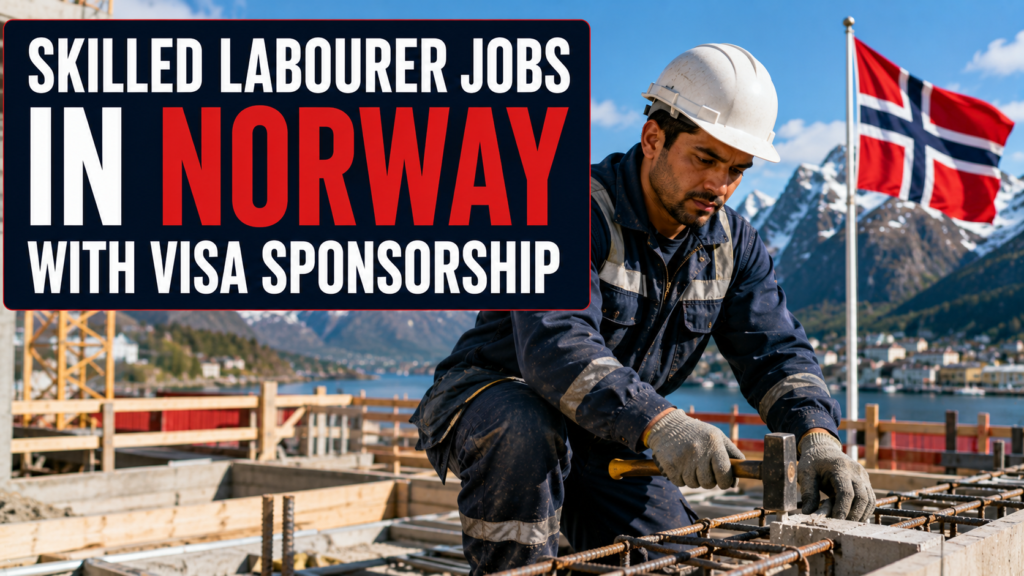
Skilled labourers are important to Norway’s construction, manufacturing, maintenance, logistics, agriculture, and industrial sectors. Companies need workers who can perform practical tasks safely, use tools and equipment, and support skilled tradespeople on different projects. This creates opportunities for experienced workers with practical skills.
For workers from outside the EU/EEA, getting a skilled labourer job in Norway can be more challenging. Employers must follow Norwegian immigration and employment rules, and a job offer does not automatically guarantee visa sponsorship. Applicants should confirm that the employer is willing to support the required work permit process before making travel plans.
Job Overview
- Job Title: Skilled Labourer
- Country: Norway
- Job Type: Full-time, temporary, contract, and permanent
- Experience Required: Usually 1–3 years, depending on the position
- Education Required: Relevant vocational training may be preferred
- Visa Sponsorship: Possible for eligible non-EU/EEA workers, but not guaranteed
- Work Locations: Oslo, Bergen, Stavanger, Trondheim, Tromsø, and other areas
- Main Duties: Manual work, equipment handling, construction support, maintenance, loading, installation, and site preparation
- Work Environment: Construction sites, factories, warehouses, farms, workshops, and industrial facilities
Why Skilled Labourers Are Needed in Norway
Norway has a strong construction and industrial sector that requires workers with practical experience. Construction companies need labourers for building projects, road work, renovation, infrastructure development, and general site operations.
Skilled labourers can also find opportunities in manufacturing, shipyards, warehouses, agriculture, maintenance, and other industries. The exact demand changes by region and sector, so applicants should look at current vacancies rather than assuming that every employer offers sponsorship.
For non-EU/EEA workers, immigration eligibility is an important part of the process. The position, qualifications, experience, and employment contract can all affect whether a worker qualifies for the appropriate residence permit.
Types of Skilled Labourer Jobs Available
Construction Labourer
Construction labourers support building and renovation projects. Their work may include preparing materials, moving equipment, assisting tradespeople, cleaning work areas, and carrying out basic construction tasks.
Industrial Labourer
Industrial workers may assist with production, machinery operations, material handling, assembly, and general factory duties. Safety procedures are especially important in industrial workplaces.
Maintenance Labourer
Maintenance labourers assist with repairs, site maintenance, equipment checks, and general upkeep. Employers may prefer applicants with mechanical, electrical, or technical experience.
Warehouse Labourer
Warehouse workers can be responsible for loading and unloading goods, moving materials, preparing orders, checking deliveries, and maintaining organised storage areas.
Agricultural Labourer
Agricultural workers may work on farms, greenhouses, livestock operations, or seasonal agricultural projects. Duties vary depending on the type of farm and season.
Also Check: Farm Worker Jobs in Norway with Visa Sponsorship 2026
Job Responsibilities
A skilled labourer may be responsible for:
- Preparing and moving materials.
- Loading and unloading equipment.
- Supporting skilled tradespeople.
- Operating basic tools and equipment.
- Preparing construction or work areas.
- Cleaning and maintaining workspaces.
- Assisting with installation and repairs.
- Following workplace safety procedures.
- Inspecting materials and reporting problems.
- Carrying out manual handling tasks.
- Following instructions from supervisors.
- Maintaining tools and equipment properly.
The responsibilities depend heavily on the industry. Construction positions may involve more physical site work, while industrial jobs may involve machinery, production lines, or warehouse equipment.
Salary and Employee Benefits
Salaries for skilled labourers in Norway vary according to industry, experience, location, qualifications, working hours, and the employment contract. Workers with specialised skills or several years of experience may have access to better-paying positions.
Depending on the employer and contract, benefits may include:
- Regular wages.
- Paid holiday arrangements.
- Overtime payments where applicable.
- Shift allowances for qualifying work.
- Workplace insurance and protections.
- Pension arrangements.
- Training opportunities.
- Protective clothing and safety equipment.
- Possible accommodation assistance.
- Travel support for some remote projects.
Applicants should compare the offered salary with working hours and living costs. They should also understand whether accommodation, transport, meals, or other expenses are deducted from their wages.
Visa Sponsorship Process
1. Find a Suitable Employer
Search Norwegian construction companies, industrial businesses, logistics companies, farms, and other employers with relevant vacancies. Look specifically for companies that recruit workers from outside Norway and can support the required immigration process.
2. Receive a Genuine Job Offer
A genuine employment contract should clearly explain the job title, salary, working hours, workplace, and employment conditions. Applicants should verify the employer before providing personal information or paying any fees.
3. Check Residence Permit Requirements
Non-EU/EEA workers generally need the appropriate Norwegian residence permit to work legally. The correct permit depends on the worker’s circumstances, qualifications, and employment.
4. Submit the Application
The worker may need to provide documents such as a passport, employment contract, proof of qualifications, and evidence of relevant work experience. Additional documents may be required depending on the application.
5. Complete the Immigration Process
Once the relevant authorities approve the application, the worker can follow the instructions for entering Norway and completing any required registration procedures. Workers should not begin employment until they have the legal right to work.
Requirements for Skilled Labourer Jobs
Employers can set their own requirements, but common expectations include:
- Valid passport.
- Relevant work experience.
- Practical knowledge of tools and equipment.
- Ability to perform physical tasks.
- Good workplace discipline.
- Ability to follow safety instructions.
- Reliability and punctuality.
- Basic communication skills.
- Relevant vocational training for some positions.
- Willingness to work shifts or overtime when required.
Some jobs require formal qualifications or certificates. For example, positions involving specialised machinery, technical work, or regulated trades may have additional requirements.
Skills That Improve Your Chances
Practical experience can make an application stronger. Workers who have experience in construction, manufacturing, maintenance, logistics, or agriculture should clearly describe their previous duties on their CV.
Safety awareness is also highly valued. Employers want workers who understand workplace rules, use protective equipment correctly, and follow instructions.
Basic English can be useful in international workplaces. Learning Norwegian can provide an additional advantage, particularly for jobs involving regular communication with supervisors, customers, or local teams.
Working Conditions
Skilled labourer work can be physically demanding. Workers may spend long periods standing, walking, lifting materials, bending, climbing, or working outdoors. Construction and industrial workers may also work in cold or changing weather conditions.
Working hours depend on the employer. Some positions involve normal daytime schedules, while others may include evening shifts, weekends, overtime, or rotating schedules.
Workers should receive information about workplace safety, equipment, protective clothing, and procedures before starting their duties.
Advantages of Working as a Skilled Labourer in Norway
- Opportunities across several industries.
- Demand for practical and technical skills.
- Possibility of gaining international work experience.
- Opportunities to develop new workplace skills.
- Potential overtime and shift opportunities.
- Experience that can support career progression.
- Exposure to modern industrial and construction workplaces.
- Opportunity to develop Norwegian language skills.
How to Apply
- Search Norwegian job websites and company career pages.
- Look for construction, industrial, warehouse, maintenance, and agricultural vacancies.
- Check whether the employer recruits workers from outside the EU/EEA.
- Prepare a clear CV with practical experience and qualifications.
- Include relevant certificates and training.
- Apply directly through legitimate company websites or trusted recruitment channels.
- Ask the employer about support for the required work authorization.
- Carefully review the employment contract.
- Confirm salary, working hours, accommodation, and deductions.
- Never pay an unknown person for a guaranteed Norwegian visa or job.
- Complete the required immigration process before starting work.
- Click Apply Now to get started
Final Thoughts
Skilled labourer jobs can offer opportunities in Norway’s construction, industrial, logistics, maintenance, and agricultural sectors. Workers with practical experience, strong safety awareness, and relevant training may find positions that match their skills.
For non-EU/EEA applicants, visa sponsorship should not be assumed simply because a vacancy is available. The worker must meet the applicable immigration requirements, while the employer must provide a genuine job and follow the required employment procedures.
The safest approach is to apply directly to legitimate employers, verify the employment contract, and confirm the relevant work permit requirements before travelling. With the right experience, qualifications, and a genuine job offer, skilled labourers can explore employment opportunities in Norway in 2026.